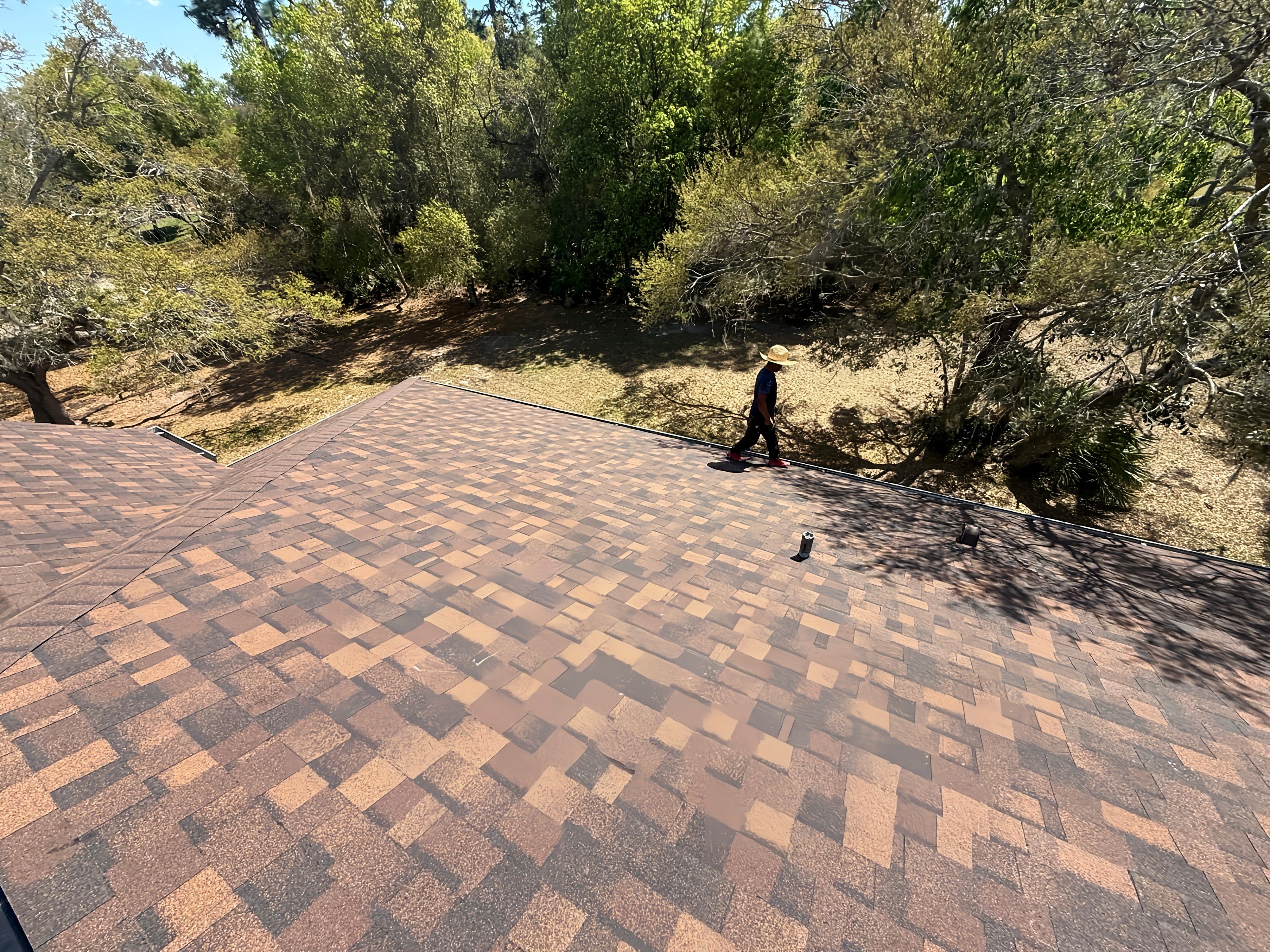
Shingle, metal and tile all work in Central Florida. They differ in upfront cost, lifespan and upkeep. Here they are side by side on the same one-story Orlando house.
| Feature | Architectural shingle | Standing seam metal | Concrete tile |
|---|---|---|---|
| Typical installed price | $12,000 to $22,000 | $26,000 to $48,000 | $28,000 to $50,000 |
| Realistic life in Central Florida | 15 to 22 yrs | 40 to 60 yrs | 30 to 50 yrs (tiles) |
| What usually ends it | UV aging, seal strip failure, storm damage | Fastener or sealant wear, rarely the panels | Underlayment failure at 20 to 25 years |
| Weight | Light | Lightest | Heavy |
| Maintenance | Low, watch for lifted shingles | Very low, check fasteners and sealants | Moderate, watch for cracked tiles |
| Best for | Budget, shorter ownership | Long ownership, low upkeep | Long ownership, the classic Florida look |
The lifespans are our field experience on local roofs, not the numbers printed on warranty paperwork. Our Orlando roof replacement cost guide explains what each price includes.
What are the pros and cons of shingles in Florida?
Pros. Shingles cost the least upfront. They are quick to install, easy to repair and come in many colors. Most Orlando homes already have them, so no structural changes are needed.
Cons. They have the shortest life of the three. Florida heat and UV dry out the asphalt, and wind can break the seal strips. A shingle with a broken seal flaps a little more in every storm after that.
Shingles make sense if you plan to move in the next 10 to 15 years, or if your budget is tight. Learn more about our shingle roofing service.
What are the pros and cons of metal roofing?
Pros. Standing seam metal has the longest life of the three. The panels rarely fail. It sheds rain fast, reflects heat well with the right finish and needs little maintenance.
Cons. It costs roughly twice as much as shingles upfront. Repairs need a roofer who knows metal. Panel color and profile choices are more limited than shingles.
Metal pays off for owners who plan to keep the house. Over 40 years or more, you could avoid one or two shingle replacements. See our metal roofing service.
What are the pros and cons of tile roofing?
Pros. The tiles themselves last decades and hold up well to sun.
Cons. Tile costs the most upfront and is heavy. Somewhere around year 20 to 25 the underlayment gives out, while the tiles on top can still look new. Replacing it means lifting and resetting the tiles. Walking on tile can crack it, so repairs and other roof work take care.
Tile makes sense for long ownership, for neighborhoods where it fits the look, and on homes built to carry the weight. See our tile roofing service.
Which roof is best for hurricanes?
Florida requires roofing products to carry product approval before they are used in construction (section 553.842, Florida Statutes). On a site-built house whose original permit predates the statewide code of March 2002, a reroof must also add better deck nailing and a secondary water barrier (section 553.844, Florida Statutes). Those steps decide much of how a roof does in high wind.
What we watch for on every job:
- Deck re-nailing to current code
- A secondary water barrier under the roof covering
- The right fasteners and attachment method for the product's approval
- Solid flashing at walls, valleys and penetrations
Read more in our Florida Building Code roof requirements guide.
How does roof material affect insurance?
Florida's wind mitigation form, OIR-B1-1802, asks the inspector to list every roof covering on the home and whether each one meets the Florida Building Code with a product approval current at installation. A new roof of any type, installed to code, gives your insurer the documentation it needs. How that paperwork can trim your premium is covered in our wind mitigation inspection guide.
What about flat roofs?
If part of your home has a flat or low-slope roof, like a porch or addition, that section needs a different system. TPO or modified bitumen typically runs $7 to $13 per square foot. See our flat roofing service.
How do I choose?
The choice usually comes down to how long you will stay in the house and how much weight your framing can carry. If you will stay 20 years or more, metal or tile usually costs less per year of roof. If you will move sooner, shingles usually make more sense.
Still torn? At a free roof inspection we look at the deck and the framing, rule out any material your house cannot carry and price the rest in writing. Financing is available. We install Owens Corning shingle systems with in-house crews. Also see how long a roof lasts in Florida and repair vs replacement.