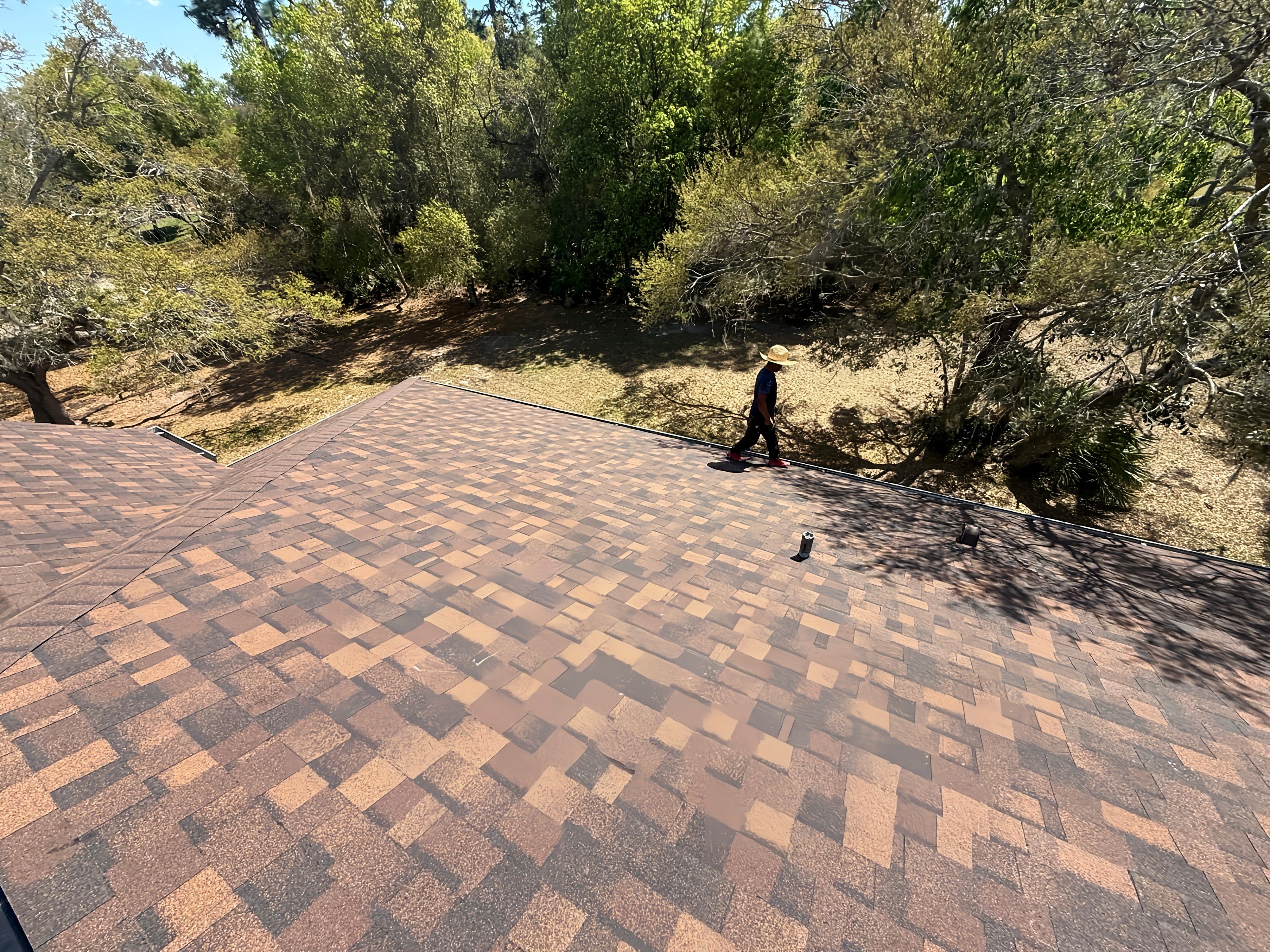
Water from a roof leak spreads through insulation, drywall and decking, so start the same day. Most leaks have one clear source, and common leak repairs in Orlando run $350 to $1,500. The table lists what to do, in order.
| Step | Do it when |
|---|---|
| Protect people and power | Immediately |
| Catch water and move belongings | Immediately |
| Photograph the damage | Before any cleanup |
| Find the entry point from the attic | When it is safe |
| Tarp the roof if it is open | Same day |
| Call a roofer for a repair | As soon as you can |
| Report to insurance if a storm caused it | Promptly, within one year of the loss |
How do I protect the inside of the house first?
- Check for electrical risk. Water dripping from a light, a ceiling fan or near an outlet means you flip that circuit off at the panel, as long as you can reach the panel on dry floor.
- Catch the water. Use buckets, pots and towels. Put a board or towel in the bucket to stop splashing.
- Move belongings. Move furniture, electronics and rugs out of the way, or cover them with plastic.
- Relieve a bulging ceiling. If drywall is sagging with water, poke a small hole at the lowest point with a screwdriver, with a bucket underneath. Draining the water keeps its weight from bringing the ceiling down.
- Keep people away from any sagging ceiling.
How do I find where the leak is coming from?
Water rarely drips straight down from the hole. It runs along rafters and the underside of the deck before it falls. If it is safe to get into your attic:
- Bring a flashlight and step only on framing, never on the drywall between joists.
- Look uphill from the wet spot for dark, wet wood or a drip trail.
- Check around pipes, vents, chimneys and skylights first.
- Mark the spot so the roofer can find it from inside.
Common sources we find on Orlando roofs:
| Source | Typical cause |
|---|---|
| Pipe boots | Rubber cracked by sun and heat |
| Flashing at walls and chimneys | Loose, rusted or missing |
| Valleys | Debris buildup or worn underlayment |
| Lifted or missing shingles | Broken seal strips after wind |
| Cracked or slipped tiles | Storm damage or foot traffic, worn underlayment |
| Skylights | Failed seals or flashing |
When do I need emergency tarping?
A missing patch of shingles, a row of broken tiles or a limb through the deck needs cover before the next afternoon storm. A good tarp extends well past the opening and is battened down so wind cannot lift its edges. Most of the tarps we install cost $300 to $1,200; steep or large roofs land at the upper end.
Do not climb on a wet roof to do it yourself. You can fall, and a poorly fastened tarp can blow off and make the damage worse. Assure-U answers storm emergencies 24/7 at (407) 970-9746.
How should I document the leak?
Take photos and video of the ceiling, walls, floors and damaged belongings before cleanup. If it is safe, photograph the attic and any visible roof damage from the ground. Keep receipts for tarping, fans, dehumidifiers and anything you buy to limit damage.
For a claim, the state's Homeowner Claims Bill of Rights expects you to stop the leak from getting worse and keep proof of it, with photos from before and after the fix. It also suggests a call to the insurer before any contract for the lasting repair.
Will insurance pay for my roof leak?
Insurers look at why the water got in. Wind that tore a shingle loose is usually covered; a cracked pipe boot on an aging roof usually is not. A storm leak has to be reported within a year of the storm (section 627.70132, Florida Statutes), and the full claim timeline is in our storm damage guide. For more, read does homeowners insurance cover roof replacement in Florida and what to do after roof storm damage.
Be wary of anyone who offers to cover your deductible. A roofer who promises to waive your deductible or hand you a gift card for filing is breaking Florida law (section 489.147, Florida Statutes).
Is a leak a sign I need a new roof?
One leak with one clear cause is usually a repair. Leaks that keep showing up in new places mean the roof is failing as a whole. See signs you need a new roof and repair vs replacement.
Who should repair the leak once the water is contained?
Call a licensed roofer who traces the leak to its source before quoting. Swapping a pipe boot, resealing a wall flashing or re-setting a handful of shingles runs $350 to $1,500. Major or storm repairs run $1,500 to $5,000. Our Orlando roof leak repair page shows where leaks start on each roof type and how we price the fix.
If a storm left the roof open, call (407) 970-9746 or see our emergency tarping service. If the leak has stopped, book a free roof inspection. For damage beyond a single leak, see our roof repair service.