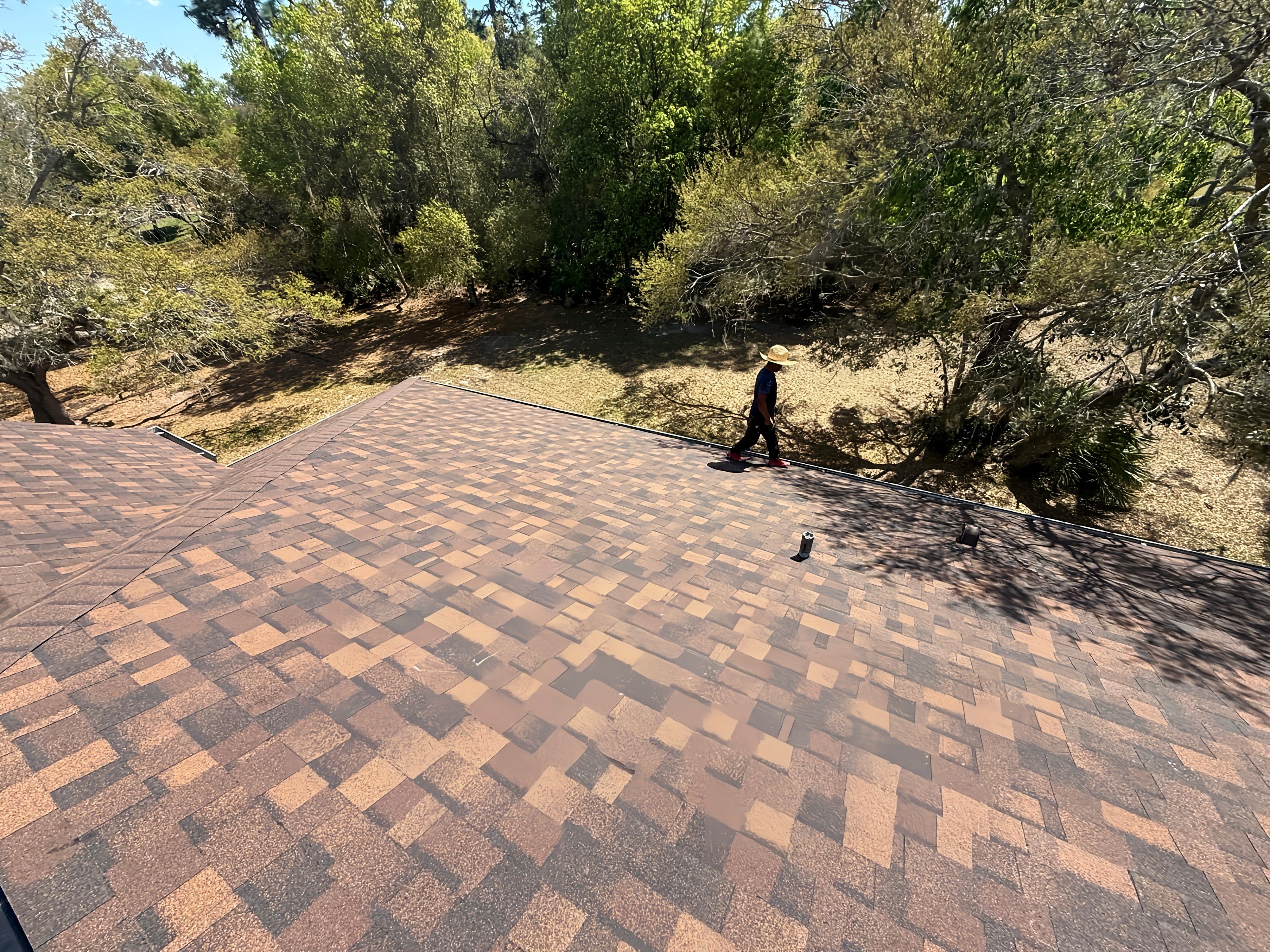
Start in the attic, because the inside of the roof deck shows where water gets through before the ceiling does. If the attic tells you nothing, a garden hose test can recreate the leak on a dry day.
This guide is about tracing the source. If water is coming through your ceiling right now, read what to do when your roof is leaking first.
Why is the leak not directly above the stain?
Water takes the easiest path downhill. Once it gets past the shingles or tile, it often lands on the underlayment or the top of the decking and travels down the slope before it finds a seam. Inside the attic it can cling to the underside of the deck, run along a rafter or truss, and drip off at a low point several feet away.
So a stain near an outside wall can start at a vent near the ridge, and two stains can share one source. Treat the stain as the end of the trail, not the start.
Is it safe to go into the attic to look for a leak?
It can be, with some care. ENERGY STAR's attic air sealing guide tells homeowners to walk on joists or truss chords, never on exposed drywall or insulation, so they do not fall through the ceiling. The same guide advises starting early in hot weather, because attics heat up as the day goes on. A CDC NIOSH bulletin names attics as non-climate-controlled spaces where workers face heat stress. In an Orlando summer, go up in the morning, bring water and come down if you feel dizzy.
Before you climb, gather these:
- A bright flashlight or headlamp.
- A board or piece of plywood wide enough to span two joists, so you have a stable place to kneel.
- Long sleeves, gloves and a dust mask for fiberglass insulation.
- A marker or tape to flag what you find.
Watch for roofing nails coming through the deck overhead. If wiring near the wet area looks damaged, stay clear of it and call an electrician.
How do I trace a roof leak from the attic?
The best time to look is during a rain or within an hour after it stops. Water is still moving, and wet wood is darker and easier to spot.
- Go to the area above the ceiling stain. Count joists from a wall or the hatch to match the room below.
- Look at the insulation first. A compressed, matted or discolored patch marks where water has been landing.
- Shine your light up at the underside of the deck. Look for dark wood, water lines, a shine of moisture or white mineral deposits.
- Follow the trail uphill. Trace the wet streak along the rafter or deck seam toward the ridge until it stops. The highest wet point is the closest you can get to the entry.
- Check every roof penetration nearby. Plumbing vents, exhaust vents, skylight curbs and chimney chases all pass through the deck and are frequent entry points.
- Mark it. Put tape on the rafter and take a photo with something in the frame for scale.
ENERGY STAR lists wet or damp attic insulation as a sign of a leaky roof, and moldy or rotted rafters as a sign of moisture problems. If you see rot or mold, that guide recommends hiring a professional before doing other attic work.
Dry the wet area quickly. The EPA says water-damaged materials dried within 24 to 48 hours usually will not grow mold. Pull back soaked insulation so the deck and drywall can dry.
How do you water test a roof with a garden hose?
A hose test recreates rain on one section of roof at a time while someone watches inside. It works best on a dry day, after the attic is dry, so new water is easy to see. It takes two people with phones on a call.
| Role | What they do |
|---|---|
| Person outside | Runs the hose on one zone at a time at a light, steady flow, and calls out each zone before starting |
| Person in the attic | Watches the marked area with a flashlight and calls out the moment a drip or new wet spot appears |
Work from low to high. If you start at the ridge, water runs down over every lower spot at once, and you cannot tell which one failed. Starting at the eave and moving up isolates each section.
- Start below the suspected area. Soak the roof just downhill of where you think the leak is, so you can rule that zone out.
- Soak one zone for several minutes. A zone is a strip a few feet wide, such as the shingles just below a pipe boot. Keep the flow steady and light, like rain.
- Move up one zone at a time. Next, wet the lower side of the vent or flashing, then each side, then above it.
- Stop when the drip appears. The last zone you wet before the drip is your leak area.
Use an open hose or a shower nozzle, never a jet spray or pressure washer.
Stay off the roof if it is steep, two stories or covered in tile. You can run many tests from a ladder at the eave. A hose test also will not reproduce every leak. IBHS research on wind-driven rain studied how storm winds push water through openings in roof systems, and a garden hose cannot recreate that pressure.
Where do roof leaks usually come from?
Our emergency leak guide lists the parts that fail most often. This table works from the other direction. It starts with where you see water and names what to check first.
| Where you see water | Check first |
|---|---|
| Ring of stain around a bathroom or kitchen ceiling | Plumbing vent pipe boot above that room |
| Along an exterior wall below a second story | Step flashing and kickout flashing where the lower roof meets the wall |
| Near the center of the house in a long line | Ridge vent, or a valley above |
| Around a ceiling fan or light at the top floor | Exhaust vent or nearby pipe boot |
| Above a skylight or along its frame | Skylight flashing, then the curb, then the glass seal |
| Low on the slope, near the eave | Clogged gutters, a missing drip edge or a soffit vent |
| Only after strong storms, in different spots | Missing shingles or tiles, or exposed deck seams |
Skylight leaks have their own causes and fixes. See why skylights leak and whether to reflash or replace.
Could the water be coming from something other than the roof?
Yes, and it is worth ruling out before you pay for a roof repair. If your air handler sits in the attic, a clogged condensate line or a rusted drain pan can soak the ceiling below on a sunny day. A leak that shows up without rain points away from the roof.
Condensation is the other common cause. Warm, humid indoor air that reaches a cooler deck or duct can leave water behind. ENERGY STAR notes that sealing and insulating the attic floor blocks heat and moist air from below, and that insulation should never cover soffit vents. Damp spots spread evenly across the deck, rather than a single trail, often point to moisture from inside the house.
When should I stop and call a roofer?
Call when the trail leads to something you cannot see or reach safely, when you find rot or mold, or when the leak only shows up in storms. Our common repair range is $350 to $1,500 for leaks, lifted shingles, flashing, pipe boots and small decking spots. If several spots keep leaking, read repair vs replacement.
Bring your tape marks and photos to a free roof inspection. We follow the water from the stain up through the attic to the roof surface, then give you a written repair price.