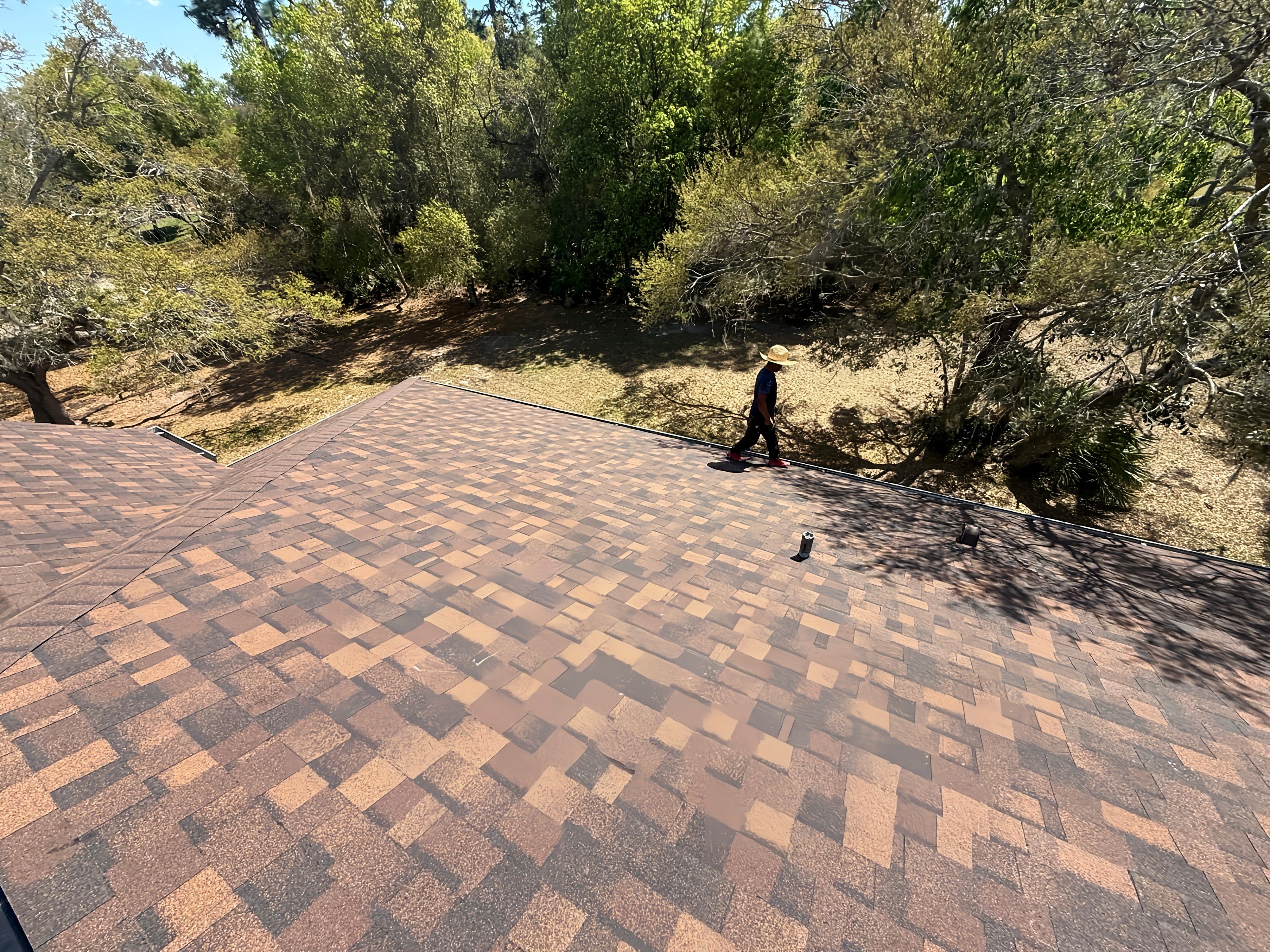
My Safe Florida Home is run by the Florida Department of Financial Services. For most homeowners who qualify for a grant, the state pays $2 for every $1 you pay toward eligible upgrades, up to $10,000. The program's rules are set by statute and change when the Legislature amends it. Everything below reflects the program site, its FAQ and the 2026 Florida Statutes as of October 2026. Check the official My Safe Florida Home site before you make plans.
| Detail | Free inspection | Grant |
|---|---|---|
| Homestead exemption | Required | Required |
| Site-built, owner-occupied | Required | Required |
| Built before January 1, 2008 | Not required | Required |
| Insured value $700,000 or less | Not required | Required |
| Low or moderate household income | Not required | Required |
| Cost to you | Nothing | $1 for every $2 from the state, unless low-income |
Who is eligible for the free inspection?
As of 2026, the My Safe Florida Home FAQ says you need a single-family home on its own parcel of land. It must be site-built, owner-occupied and have a Florida homestead exemption. The 2026 statute also covers attached units that share a wall, up to three stories, on an individual parcel.
The program FAQ lists homes that do not qualify, including condominiums, cooperatives, mobile or manufactured homes, multi-family homes, and second, vacation or rental homes.
You pay nothing for the visit, the program picks the inspector, and you can stop there if a grant does not fit.
Who is eligible for a grant?
You must first qualify for, and receive, the program inspection. Then, as of 2026, your home must meet these requirements under s. 215.5586, Florida Statutes.
- Insured value of $700,000 or less.
- Built before January 1, 2008, as shown on the county property appraiser's website.
- Low-income or moderate-income household. Florida law defines low income as household income up to 80 percent of the area median, and moderate income as less than 120 percent (section 420.0004, Florida Statutes). The statute uses the higher of the state or local median.
- Licensed contractor. You give the program your contractor's name and state license number.
- Final inspection. You agree to a final inspection and to share any insurance discount information.
The inspection must have been done within 24 months before you apply.
How much is the grant, and how does the match work?
As of 2026, the state contributes up to $10,000. For most homeowners, it is a matching grant. The state pays $2 for every $1 you pay.
| Project cost | State reimbursement | Your share |
|---|---|---|
| $9,000 | $6,000 | $3,000 |
| $15,000 | $10,000 | $5,000 |
| $20,000 | $10,000 | $10,000 |
These examples come from the program's own FAQ. Low-income homeowners can receive up to $10,000 with no match required, and low-income homeowners 60 or older get the highest priority.
What improvements can the grant pay for?
The program funds upgrades recommended in your inspection. Its site lists roof improvements, roof deck attachment, roof-to-wall connections, secondary water resistance, impact windows and doors, and garage door reinforcement.
Re-nailing the deck and adding a secondary water barrier are both on that list, and on most homes old enough for a grant, a permitted reroof has to include both anyway. See Florida Building Code roof requirements and what a wind mitigation inspection checks.
How does the process work?
- Create an account on the program portal and complete the prioritization questionnaire.
- Get placed in an inspection group and complete the inspection application.
- Have the free inspection with the assigned program inspector.
- Apply for the grant if your report shows eligible upgrades.
- Wait for approval. Do not start work before you have it.
- Complete the work with your licensed contractor and all required permits.
- Request a final inspection and submit a draw request. Matching grants need a paid-in-full invoice. Payment is a mailed reimbursement check.
You have 18 months from grant approval to finish construction and request the final inspection.
Is the program open right now?
Check the program site for current status. Its FAQ says applications open in phases, and funding depends on what the Legislature appropriates each year. Some 2026 amendments to the statute are set to expire July 1, 2027. If you think you qualify, create your portal account early so you are in line when your phase opens.
How can a roofer help?
We cannot apply for you, and we are not part of the program. We can give you an itemized proposal for the roof items in your inspection report, pull the permits and do the work to code once your grant is approved. Start with a free roof inspection, or read about our wind mitigation service. Typical prices are in our Orlando roof replacement cost guide.