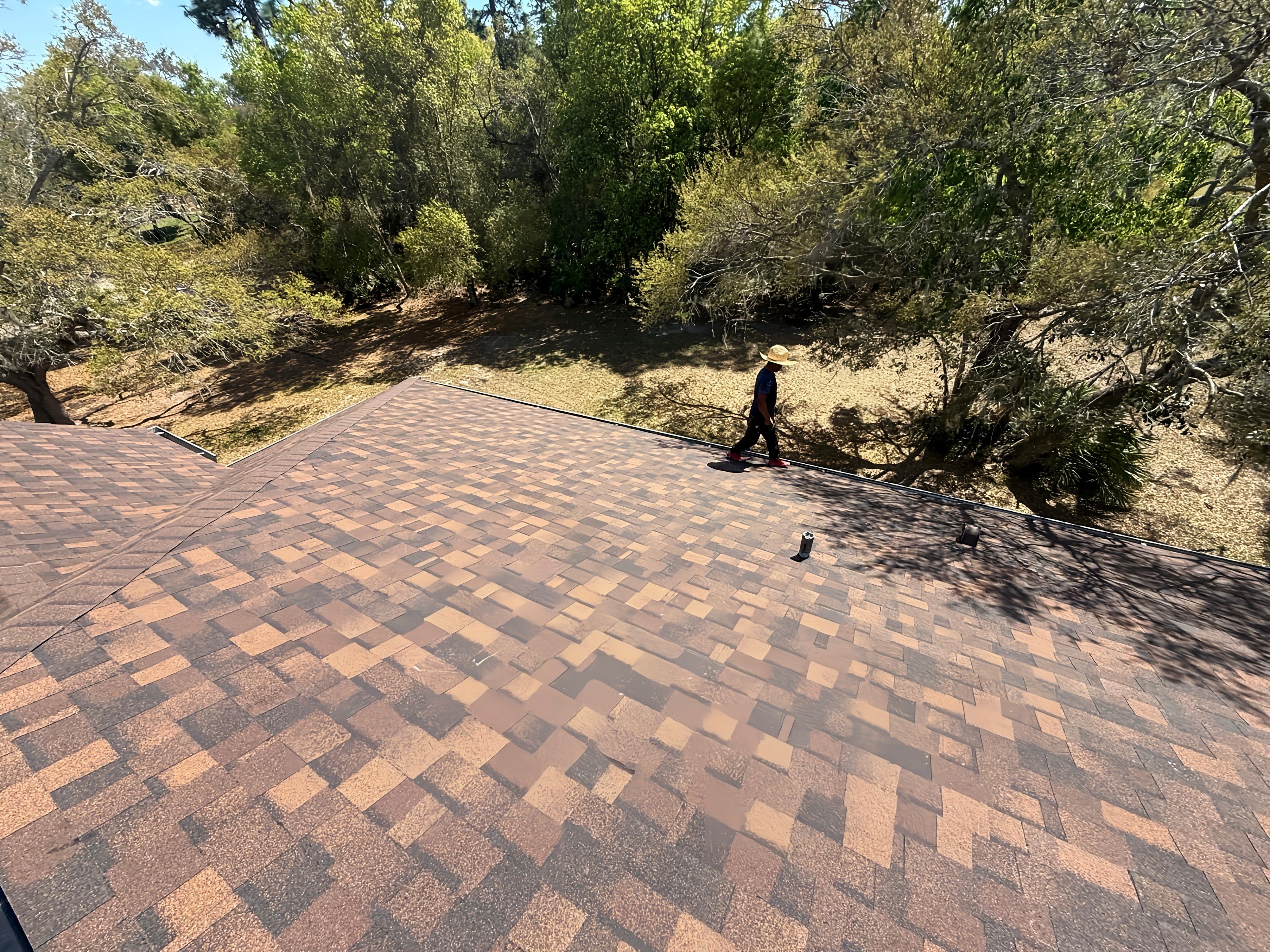
Coverage turns on what caused the leak. A homeowners policy pays for sudden, accidental damage from a peril it covers. It does not pay to keep a roof from wearing out. The same drip in the same ceiling can be a paid claim in one house and a denial in the next.
| What caused the leak | Usually covered? |
|---|---|
| Wind lifts or tears off shingles or tiles | Yes, after the deductible |
| A tree or limb falls and punctures the roof | Yes, after the deductible |
| A pipe boot cracked from years of sun | No |
| Shingles curling, brittle or losing granules from age | No |
| A slow leak left alone until the decking rotted | No |
That table is the general pattern. Your policy is the contract that decides your claim. Read the covered perils, the exclusions and the declarations page before you file, and ask your agent about anything unclear. Florida does not let a roofing contractor interpret your policy, and this guide does not either. It explains what the Florida statutes cited below say.
What is the difference between sudden and gradual roof damage?
Sudden damage happens at a point in time you can name. A storm on a specific date blew off a row of shingles, and water came in that night. Gradual damage builds over months or years. Sealant dries out, a rubber boot cracks, granules wash off, and a small leak spreads until someone sees a stain.
Policies cover the first kind and exclude the second. Look in your exclusions for wear and tear, deterioration and lack of maintenance. An adjuster looking at an older roof has to decide which one caused your leak. Expect the adjuster to weigh how old the roof is, what shape the flashing and shingles near the leak are in, and whether the damage matches a storm date.
Evidence tied to a date carries the most weight. Pre-storm roof photos, an inspection report from the past year or two and weather data for the day in question all help. Our guide to why Florida roof claims get denied covers what to do if the adjuster calls it wear and tear.
How long do I have to report a roof leak in Florida?
Florida Statutes section 627.70132 sets three deadlines, all counted from the date of loss. A claim is barred if notice does not reach the insurer, under the policy's terms, within these windows.
| Type of claim | What it means under the statute | Notice deadline |
|---|---|---|
| Initial claim | A new claim for the leak | 1 year after the date of loss |
| Reopened claim | A claim the insurer closed, reopened because you are asking for more costs for damage you already reported | 1 year after the date of loss |
| Supplemental claim | Additional loss from the same peril the insurer already adjusted, or costs that come up during repairs on an open claim with timely notice | 18 months after the date of loss |
For a hurricane, the clock starts on landfall day. For a tornado, windstorm, heavy rain or other weather event, it starts on the date NOAA, the National Oceanic and Atmospheric Administration, verified that event. The deadlines pause while a named insured servicemember is deployed to a combat zone or combat support posting that affects their ability to file. The section applies to property insurance policies, including policies from eligible surplus lines insurers. We checked the 2026 version of the section, and these deadlines are unchanged.
A leak from wear has no date of loss to count from, which is one more reason those claims fail. If a storm caused yours, report it as soon as you see it.
Does Florida's roof deductible apply to a leak claim?
Only if your policy has one, and only in some cases. Section 627.701(10) lets an insurer add a separate roof deductible. It can be no more than 2 percent of Coverage A or half of what a new roof would cost, whichever is smaller. The insurer must show its dollar amount on the declarations page or renewal notice, and you can reject it on an approved form.
For leak claims, the exceptions matter more than the cap. The roof deductible does not apply to:
- A loss where under half the roof needs repair, which covers most leaks.
- A tree fall or other hazard that damages the roof and punctures the roof deck.
- A hurricane roof loss.
- A total loss to the home from a covered peril.
The roof deductible also applies only to claims adjusted on a replacement cost basis. When it does apply, no other policy deductible applies to that loss. For how the separate hurricane deductible works, read our hurricane deductible guide.
Can an old, leaking roof cost me my policy?
The leak is the bigger risk. Section 627.7011(5) limits refusals based only on roof age, but it does nothing for a roof in poor condition. An active leak is a condition problem, and an underwriter who sees one can decline or nonrenew for that reason. Fix leaks quickly and keep the invoice. Our roof age and insurance guide covers the 15-year rule and the inspection right.
What does the Homeowner Claims Bill of Rights promise?
Under section 627.7142, your insurer must send you the Bill of Rights no later than 14 days after you first contact it about a claim on a personal lines residential policy. It tells you that you have the right to:
- Confirmation of your claim within 7 days after you report it.
- Within 60 days, a full payment, a payment of the part nobody disputes, or a denial, subject to any dual interest in the policy.
- Free mediation of a disputed claim through the Department of Financial Services, in most cases.
It also gives practical advice: file directly with your insurer, document any emergency repair, take photos before and after the work, and check in with the insurer before any repair contract gets signed.
What should I do before I file a roof leak claim?
- Stop more water from getting in. A tarp counts as an emergency repair. Keep the receipt.
- Photograph everything. Take pictures of the ceiling, the attic and the roof from the ground, with dates.
- Write down the cause and date. Name the storm or event if you know it.
- Read your policy. Find the roof deductible, the exclusions and how the roof is valued.
- Get the source documented. An inspection report that ties the leak to storm damage, or shows it is wear, tells you whether a claim is worth filing. Our guide on how to find a roof leak explains how the source gets traced.
Book a free roof inspection for a dated photo report you can share with your agent and insurer. If the leak needs fixing either way, see our roof leak repair service.