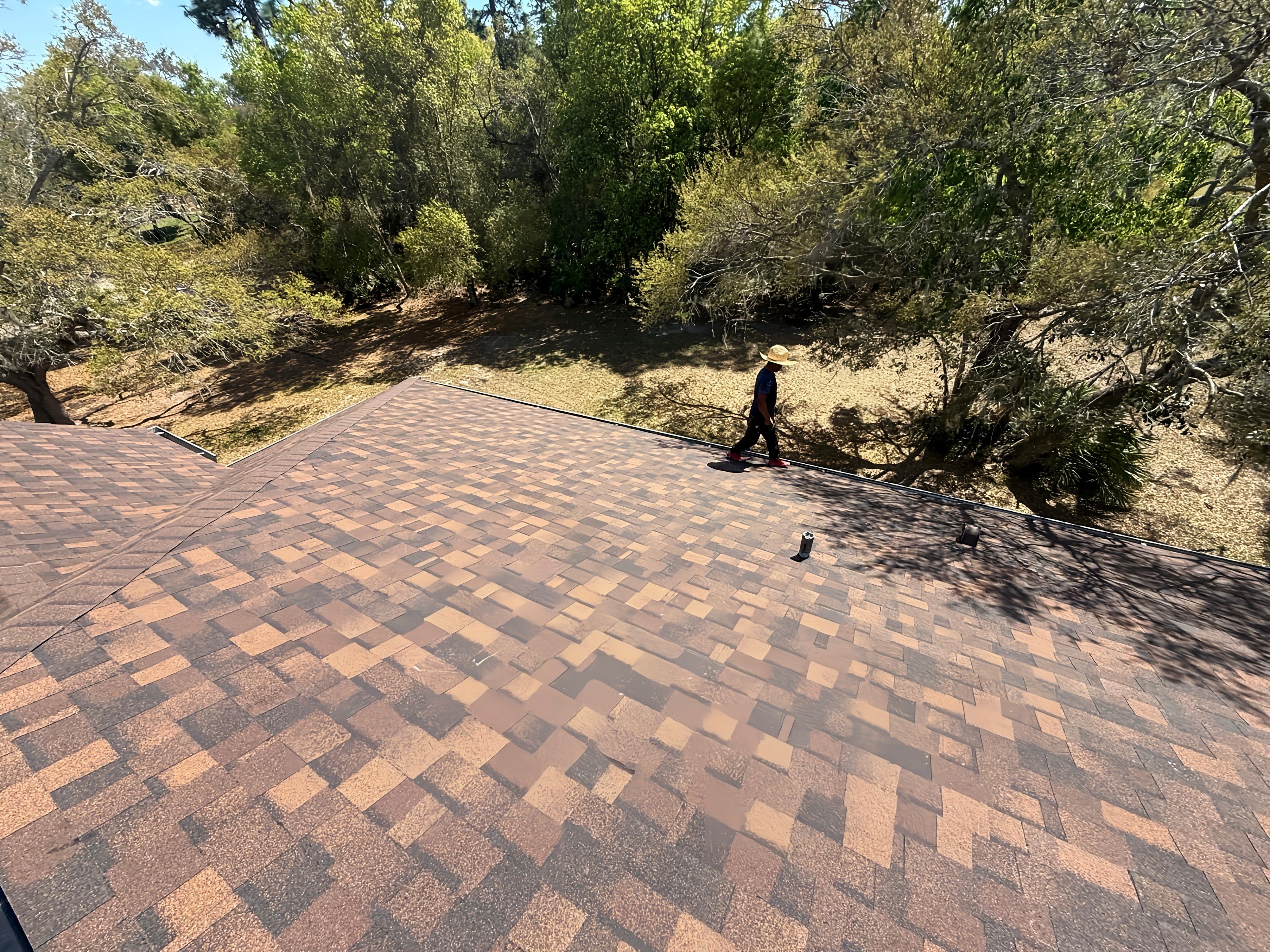
The best Florida data on roof color comes from a side-by-side test run by the Florida Solar Energy Center (FSEC) and Florida Power and Light. Researchers instrumented identical Habitat for Humanity homes in Fort Myers. Each had the same floor plan, orientation and R-19 ceiling insulation, and a different roof.
What did the FSEC test find?
The table combines the lab-measured solar reflectance of each roof with its measured cooling savings against the dark shingle control home. Solar reflectance is the share of sunlight a surface bounces back.
| Roof | Solar reflectance | Cooling energy saved vs dark shingles |
|---|---|---|
| Dark gray shingle (control) | 8.2% | None |
| White shingle | 24.0% | 3 to 5% (110 to 210 kWh a year) |
| Terra cotta barrel tile | 34.6% | 3 to 9% (100 to 300 kWh a year) |
| White barrel tile, white flat tile, white metal | 66.2 to 77.3% | 18 to 26% (600 to 1,100 kWh a year) |
| Dark shingle with sealed, foam-insulated roof deck | 8.2% | 6 to 11% (220 to 400 kWh a year) |
The FSEC report on roofing systems and cooling demand also found that during the peak summer hour, the control home's attic ran 40 degrees F hotter than outdoor air. Attics under the highly reflective roofs stayed no warmer than outdoor air. The white roofs cut peak cooling demand by 28 to 35 percent, and white metal performed best overall.
Why do light shingles save so little?
Because they are not very reflective. The white shingle in the FSEC test reflected 24 percent of sunlight, while white tile and white metal reflected 66 to 77 percent. Shingle color comes from mineral granules pressed into an asphalt base.
That gap shows up in the savings. Going from a dark shingle to a white one saved 3 to 5 percent. Going to white tile or metal saved 18 to 26 percent.
Are there reflective shingles in darker colors?
Yes. "Cool" shingle lines use solar-reflecting granules in darker colors. Owens Corning describes its TruDefinition Duration COOL shingles as having solar-reflecting granules and meeting cool roof requirements. The line is sold regionally, so check availability before you plan around it.
Ask for the product's rated solar reflectance, then compare it with the FSEC numbers above.
What happened to ENERGY STAR for roofs?
It ended. The ENERGY STAR site states that the Roof Products specification was sunset on June 1, 2022. No roof product carries the label now, though old brochures may still show it.
The last version of the standard is still a useful yardstick. The ENERGY STAR Version 3.0 roof criteria set these minimums:
| Roof type | Initial solar reflectance | After 3 years of weathering |
|---|---|---|
| Steep slope (above 2:12), such as shingles and tile | 0.25 or more | 0.15 or more |
| Low slope (2:12 or less), such as membranes and coatings | 0.65 or more | 0.50 or more |
The program required products to be tested through the Cool Roof Rating Council's Product Rating Program or by its listed test methods. When you compare roofs today, ask for those rated values, including the aged number.
Does a sealed attic do the same job?
Partly. In the same FSEC test, a dark shingle roof over a sealed attic with foam insulation on the underside of the deck saved 6 to 11 percent on cooling, with little peak reduction. The researchers concluded that sealed attics perform best when paired with reflective roofing or light tile. See our Florida attic ventilation guide for the code rules and warranty limits on sealing an attic.
What does a reflective roof cost in Orlando?
Color matters less to the price than the material does. These are our current replacement ranges, with the house size and scope explained on the cost page.
| Roof | Typical cost | Reflective option |
|---|---|---|
| Architectural shingle | $12,000 to $22,000 | Light colors or cool-granule lines, small savings |
| Concrete tile | $28,000 to $50,000 | Light or white tile, large savings in FSEC's test |
| Standing seam metal | $26,000 to $48,000 | White or light finishes, best performer in FSEC's test |
Your HOA may limit roof colors, so check its rules before choosing. For lifespan and price side by side, see shingle vs metal vs tile roofs in Florida and our Orlando roof replacement cost page.
How much will I save on my bill?
We cannot promise a number. The FSEC homes were small, slab-on-grade houses in Fort Myers, and the authors tie the effect to heat moving through the ceiling and into ducts in the attic. Your result depends on your insulation, where your ducts and air handler sit, your house size and your rate. The test does show the order of results, which is useful when you choose a roof.
Book a free roof inspection and we will walk through reflective options for your home on our tile roofing and shingle lines.
Sources
- Florida Solar Energy Center, Comparative Evaluation of the Impact of Roofing Systems on Residential Cooling Energy Demand in Florida (FSEC-CR-1220-00)
- ENERGY STAR, Roof Products Specification Version 3.0 sunset notice
- ENERGY STAR Program Requirements for Roof Products, Version 3.0 eligibility criteria
- Owens Corning, TruDefinition Duration COOL shingles