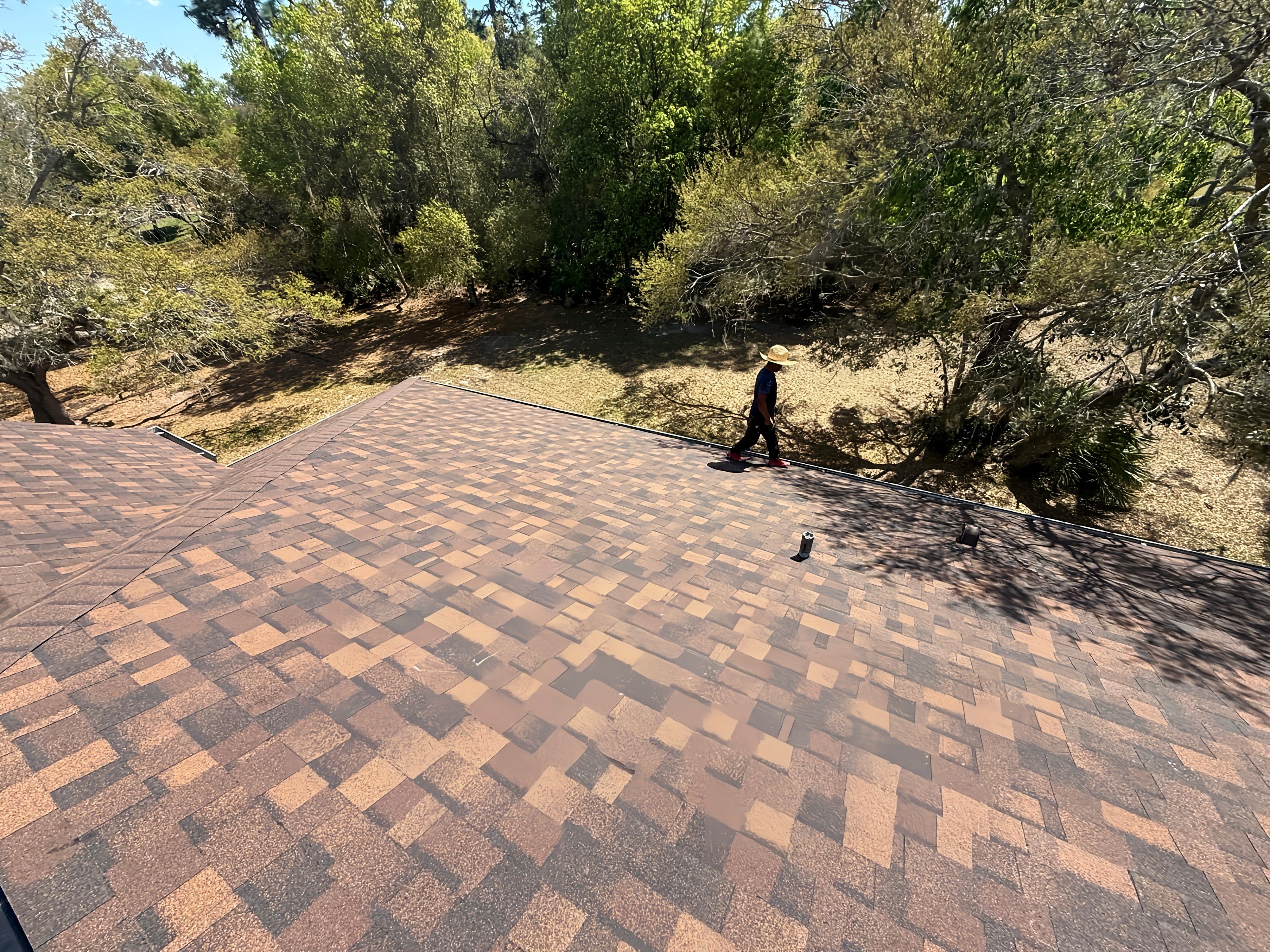
The claim is approved and the check arrives, but it has two names on it and one of them is your mortgage company. Then the servicer says it will hold the money. If you have a mortgage, this is expected, even if it is frustrating with a tarp on your roof. Here is why it happens and what Florida law requires of some lenders.
We are roofers, not attorneys, public adjusters or mortgage professionals. Your mortgage documents, your servicer and your insurer have the specific answers for your loan.
Why does my roof insurance check have my lender's name on it?
When you have a mortgage, your lender is usually named on your homeowners policy as a mortgagee. It has a financial interest in the house, because the house secures the loan. Insurers generally protect that interest by making the claim check payable to both you and the lender.
The Homeowner Claims Bill of Rights in section 627.7142 reflects this. The 60-day promise in that law (full payment, the part nobody disputes, or a denial) carries a qualifier: it is subject to any dual interest the policy lists. Your lender is that dual interest.
Why would the mortgage company hold the money?
The lender wants the house repaired, because a damaged house is worth less as collateral. Mortgage documents generally give the lender a say in how property damage proceeds are used. So instead of signing the check and handing it back, a servicer may deposit it and release the money as repairs move forward.
How it releases the money depends on your loan documents and the servicer's procedures. Ask your servicer for its procedure in writing, including whether it pays in one amount or in stages.
What does Florida law require of mortgage lenders?
Florida Statutes section 494.0026 sets rules for mortgage loans held by mortgage brokers and lenders regulated under parts II and III of chapter 494.
| What section 494.0026 requires | What it means for your roof check |
|---|---|
| Promptly endorse a check payable jointly to the lender and the insured | The lender should not sit on signing a joint check |
| Deposit property damage proceeds promptly into a segregated account at a federally insured institution | Your roof money is kept apart, not mixed with the lender's own funds |
| Promptly distribute proceeds for contents it has no security interest in | Payment for your belongings should come to you |
| Promptly distribute proceeds for additional living expenses | Payment for hotel or meal costs should come to you |
Two limits matter. The endorsement duty does not apply if the insured refuses to endorse the check. And the lender does not have to pass along the contents or living expense money if it cannot tell which part of the payment covers those items.
Does that law apply to my lender?
Not always. Under Florida Statutes section 494.00115, depository institutions, including banks and credit unions, are exempt from parts II and III of chapter 494, along with some government agencies and others. If your loan is held by a bank or credit union, section 494.0026 likely does not apply, and your loan documents and the servicer's procedures govern.
Your monthly statement names your servicer. Ask it who holds your loan if you are not sure.
Why might there be more than one check?
On a replacement cost policy, Florida Statutes section 627.7011 has the insurer send the depreciated value of the dwelling loss up front, less your deductible. The rest is paid as the repairs move forward. That can mean an early check and a later check, and each one may name your lender.
How do I get the mortgage company to release the roof money?
- Call the servicer's loss draft or insurance claims department. Ask for its claim check procedure in writing.
- Ask what it needs. Ask whether it wants items such as the insurer's settlement letter, the adjuster's estimate, a signed roofing contract, the contractor's license and insurance, or lien waivers.
- Ask how it releases funds. Find out whether it pays in one amount or in stages, and whether it requires an inspection before each release.
- Send everything in one package. Keep copies and note the date and the person you spoke with.
- Follow up in writing. If the process stalls, put your questions in an email or letter.
A stuck lender is a mortgage problem, but a stuck insurer is a state one. DFS takes insurance complaints at 1-877-693-5236.
Should I wait for the money before starting repairs?
Do not wait to stop more damage. A tarp keeps rain out of the drywall while the servicer reviews paperwork, and Florida's claims bill of rights expects owners to limit further damage and keep proof of what you paid. Our emergency tarping service covers that step.
For the permanent repair or replacement, match your contract's payment schedule to the servicer's release schedule before you sign.
For the claim itself, see what to do after roof storm damage and our hurricane deductible guide. Our Orlando roof replacement cost guide shows typical prices, and our roof permits guide covers the permit your servicer may ask about.
Servicers often want a signed contract and permit before the first draw. We can write the contract with stages that match your lender's release steps; the first step is a free roof inspection, and our roof replacement service page explains the job itself.
Sources
- Florida Statutes s. 494.0026, disposition of insurance proceeds by licensed mortgagees
- Florida Statutes s. 494.00115, exemptions from parts II and III of chapter 494
- Florida Statutes s. 627.7142, Homeowner Claims Bill of Rights
- Florida Statutes s. 627.7011(3), replacement cost payments on dwelling losses